

swedish version –https://edgemagazine.se/ice-cube/
Ice Cube
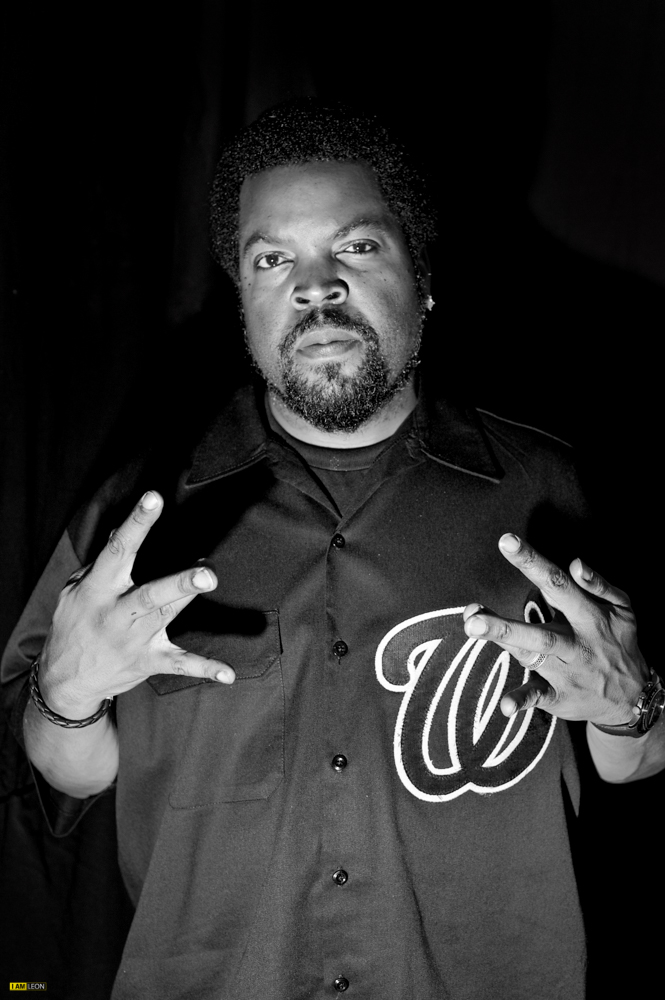
Five Minutes with the Don – Backstage with Ice Cube in Stockholm
I missed Ice Cube’s show last year, and I’ve been kicking myself over it ever since. So when word got out he was coming back to Stockholm, missing him wasn’t an option. After firing off frantic emails to labels, managers, and booking agents, things looked bleak. Nobody seemed to have a direct line to Cube, and the few who did insisted he wasn’t doing any press. Then, out of nowhere, my inbox lit up. Totte over at KB managed to connect with a guy named Janne, who was tight with the tour manager and pulled some strings to get me in. (I’m still forever indebted to those two for making it happen.)
Everything was up in the air, though—it all came down to Cube’s mood that day. Following the instructions in the email, I headed down to Münchenbryggeriet and posted up by the side of the stage.
Hours dragged by. The floor started packing out, and my hope started fading. After about two hours, a guy introduced himself as the manager and led me backstage, where the waiting game continued. I sat there so long that the opener—who was frankly terrible—went on, finished their set, and walked off. At that point, I figured the interview was dead in the water.
Just when I was ready to call it, the manager waved me into another back room. Waiting inside was Cube’s head of security: a heavyset guy sporting a goatee and a massive chain. He locked eyes with me. I shook his hand, and he just pointed at a table with no chairs. “You can sit there,” he said. I decided to stand.
A moment later, an older, unassuming guy in a cap walked out of the adjacent room. Something told me immediately it was Cube’s dad, Hosea Jackson.
“Are you Hosea Jackson?” I asked.
He smiled and nodded. “Can I get a picture?” “Yeah,” he replied. As I pulled out my camera, the bodyguard chimed in: “Give him the Westside, Pops, the Westside!” Mr. Jackson threw up the W, looking just a tiny bit out of his element.
Finally, I got the nod—the only journalist allowed into Ice Cube’s dressing room. He wasn’t alone; there was a full entourage of about ten people hanging out alongside his dad. Cube stood right in the middle. He greeted me, then immediately turned back to his crew to debate the smoothest route from Stockholm to Holland. After a few minutes of logistics, he looked at me and pointed to a high-top table stacked with towels. “Can we just stand here and do it?” Behind me, the entourage watched my every move. The vibe in the room was upbeat, though a few guys looked pretty beat from the road.
I never get nervous before interviews. I do about a hundred of them a year; it’s usually pure muscle memory. But standing there, my routine completely vanished. Maybe it was the reality of standing face-to-face with my biggest teenage idol—the guy who lived in my headphones all through the ’90s. Even if I wasent in a rap group back in the day that covered his tracks, spending days and nights transcribing his lyrics and trying to bite his flow. (I failed miserably.)
I had five minutes on the clock, so I rushed straight into the first question.
You’re 42, about to turn 43, living a completely different life than when you started out with N.W.A—back when you guys were viewed as this controversial gangsta rap group. How do you still tap into that same energy and write about the same issues now that your reality has changed?[
Cube rubs his face, takes a step back to think, then leans forward, planting both hands on the table.] “Well, here’s the thing: just because you make it out of the projects doesn’t mean you forget where you came from. I have a platform to speak on things, and that’s my job as an MC—to reflect opinions, struggles, and reality. What I rap about might be somebody else’s reality; it doesn’t always have to be my current day-to-day. I just say what needs to be said.” [He glances around the room, locks eyes with me—his expression warm—and waits for the next one.]
You crossed over from music into Hollywood with zero formal acting training, and you’ve ended up writing, directing, and starring in major films. Coming from a completely different background than most of the industry, do you feel like people in Hollywood look down on you? “
I judge a person by who they are, not where they’re from, so I really don’t care if people look sideways at me or have opinions. Honestly, I probably feel the exact same way about them, and I’m not wasting my energy on it. As for acting, there’s a long tradition of musicians transitioning to film. Back in the day, you had to know how to sing and dance just to get your foot in the door in Hollywood. You know as well as I do—studying acting isn’t rocket science. Either you have the talent or you don’t; you can’t study your way into having it. I don’t look at it like I came from a different school, just a different background.”
When you and N.W.A were in the booth calling out prejudice, police brutality, and systemic racism in America, could you ever in your wildest dreams have imagined a middle-class kid in Sweden taking your music to heart? “Hell no! We never thought anything like that would happen. At the same time, we were speaking from the heart about what we felt and saw. We were authentic, and I think when you keep it real like that, people connect with it in places you’d never expect. For N.W.A, reaching that far across the globe was a huge blessing, even if it caught us completely off guard.” [Cube rubs his hands together, punches a fist into his palm, and takes a sip of water. Out of the corner of my eye, the manager flashes the signal: one question left.]
When you go back to your old neighborhood and see guys you grew up with who ended up struggling with addiction or doing time, do they still look at you as one of them—or as someone who left them behind?
“I never turned my back on anybody; I just made my choices. You have to fight to move forward in life and build something that lasts. You can’t just fry your brain on drugs and expect things to work out. They had the exact same choices I did. A lot of them were gifted rappers, dancers, or ballplayers. Everybody has a talent, and if you use it right, you don’t end up on the streets. Life is full of opportunities. Of course I feel for them, man, but mostly it’s just a tragedy. It’s tragic watching people refuse to take control of their own lives.” [He finishes on a serious note.]
As I hurriedly packed up my camera and notepad to head back out before his set, Cube loosened up and started making small talk—genuinely warm and down-to-earth.
Moments later, watching him hit the stage, it was impossible not to be blown away. His intensity and command of the crowd are unmatched. Even as a lifelong hip-hop head, I rarely enjoy rap concerts—too often it’s just guys pacing the stage, pointing, and grabbing their crotches. Not Cube. His show is pure adrenaline, closer to a heavy metal concert in sheer raw energy.
When “Straight Outta Compton” dropped, the entire venue lost its mind, reciting every word in unison. It was pure reverence for the Godfather of Gangsta Rap, and a reminder of why we fell in love with real hip-hop in the first place.
words/photo Iam Leon